STORM TALIM LISTED, PAUSES SOME ACTIVITIES AT THE PORTS AND AIRPORTS

At 7:00 am on July 18, Typhoon Talim was 100 km from Mong Cai (Quang Ninh), with the strongest wind of 102 km/h, level 10, expected to enter the Vietnam - China border in 4 hours.

According to the National Center for Hydro-Meteorological Forecasting, Typhoon Talim crossed the Leizhou peninsula (China) at 3 am with the strongest wind of 117 km/h, level 11, then entered the coast of Guangxi province (China) and continued to decrease in level.

Circulation before the storm caused Bach Long Vi Island (Hai Phong) to have wind level 7, level 10; Cua Ong, Co To (Quang Ninh) gusts of 6-7 levels; Phu Lien (Hai Phong) wind gust level 6.

The storm is moving to the northwest with a speed of 20 km/h, expected to enter the Vietnam - China border from 11 am with the strongest wind of 88 km/h, level 9. By 4 pm, the center of the storm is in the northeast of the North, the wind decreases to level 7 and weakens into a tropical depression. The tropical depression then continued to go deep into the northern mountains and dissipated early on July 19


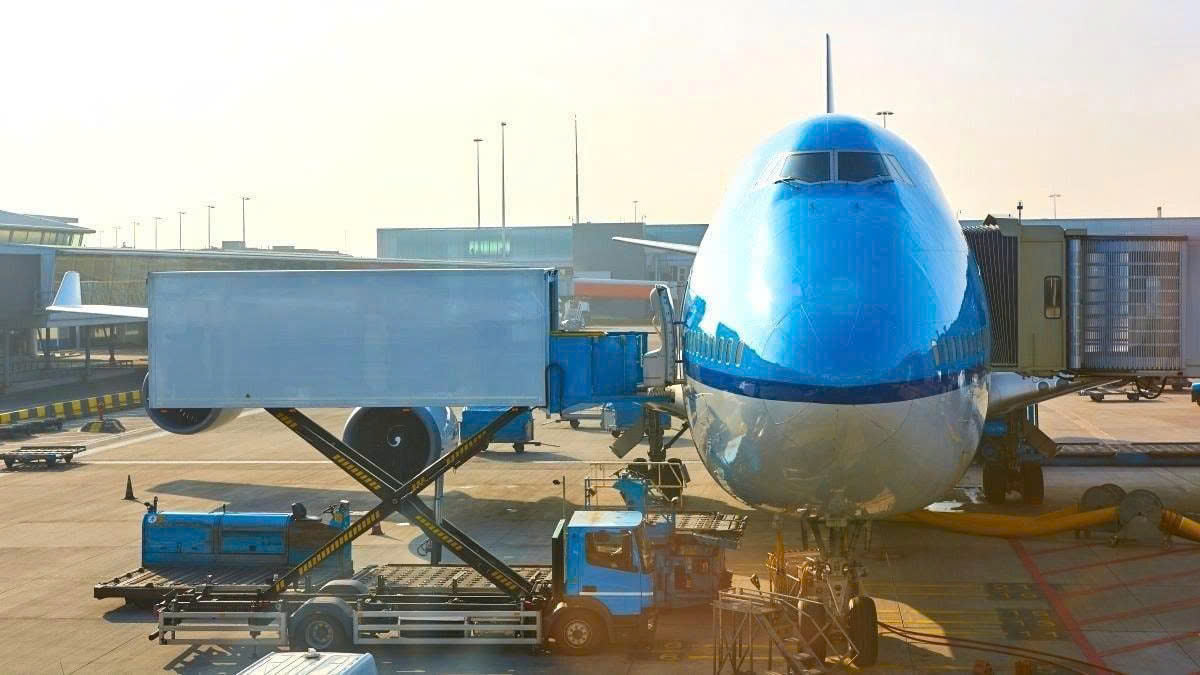
Airports expected to be in the near-affected area of the storm (thrill, strong wind, strong thunderstorm) include: Van Don (Quang Ninh), Cat Bi (Hai Phong). Airports that may be affected by storm circulation (heavy rain, strong wind) include: Noi Bai (Hanoi), Tho Xuan (Thanh Hoa).

Under the influence of storm No. 1, Noi Bai International Airport has strengthened inspection of key areas, cleared sewers to avoid local flooding; mooring aircraft, vehicles and equipment serving the ground; directing forces for natural disaster prevention, rescue and rescue of affiliated units to be on duty at the position 24/24, closely monitor the developments of storms, etc. to be ready to respond, ensuring absolute safety for people and vehicles on the aircraft apron.

Related News

Headline: Vietnam’s Paper Industry: A Strong Recovery Driven by Green Packaging and Circular Economy

After a challenging period characterized by global market volatility, Vietnam’s paper industry is entering a new recovery cycle with optimistic signals.

The SGN – SIN – BKK – KUL – CGK Race Above the Logistics Sky

As global supply chains continue to shift and the air cargo industry enters a new phase of post-pandemic restructuring, Southeast Asia is increasingly positioned as a strategic air logistics hub on the global map

Air Cargo 2025: Cooling Down After the E-Commerce “Bull Run”

After two hot years driven by e-commerce and disruption in sea freight, the air-cargo market in 2025 is slowing as supply and demand gradually normalize, belly-capacity (passenger-aircraft freight space) recovers and trade policies fluctuate. For Vietnamese companies exporting high-value goods, this is the time to re-calculate the “sea-air mix” to optimize cost, time and shipment certainty.

Related News

Glotrans would like to announce our New Year 2026 holiday schedule

We wish our valued customers and partners a joyful and happy holiday.

10th ANNIVERSARY OF GLOTRANS DA NANG BRANCH (23/12/2015 – 23/12/2025)

On 23 December 2015, Glotrans Da Nang was officially established under the strategic direction of Glotrans Vietnam, marking an important milestone in expanding our nationwide network across Central Vietnam. From day one, the branch has carried the mission of becoming an efficient logistics gateway, contributing to the enhancement of Glotrans’ nationwide service network.

GLOTRANS VIETNAM CELEBRATES VIETNAMESE TEACHERS’ DAY 20/11 HONORING THOSE WHO NURTURE KNOWLEDGE

On the occasion of Vietnamese Teachers’ Day 20/11, Glotrans Vietnam would like to extend our warmest and most respectful greetings to all teachers, trainers, and everyone who tirelessly dedicates themselves to the mission of imparting knowledge.

Related News

DISPUTE OVER THE SHIPMENT OF ENZYMES IMPORTED FROM INDIA

The shipment of food additives was transported in container No. FCIU3301688 (20’), under B/L MPRSMUM1806, on the voyage from Nhavasheva Port (India) to Dinh Vu Port (Hai Phong, Vietnam) on 29/04/2017.

The Insured’s Duty to Prevent and Mitigate Losses

Company T (Plaintiff – the Insured) entered into an insurance contract with Company B (Defendant – the Insurer). After the insured event occurred, the Insurer alleged that the Insured had violated its obligation to prevent and mitigate losses. The Arbitral Tribunal acknowledged that such an obligation exists but concluded that the Insured did not breach it.

Insurance Contracts Do Not Automatically Terminate Due to Late Premium Payment

Under the insurance contract, the premium was to be paid in three installments, and in all three, the insured party was late in payment. When a dispute arose, the insurer (Defendant) argued that the insurance contract had terminated before the insured event occurred due to the late premium payment and therefore refused to make an insurance payout. However, the Arbitral Tribunal held a contrary view.