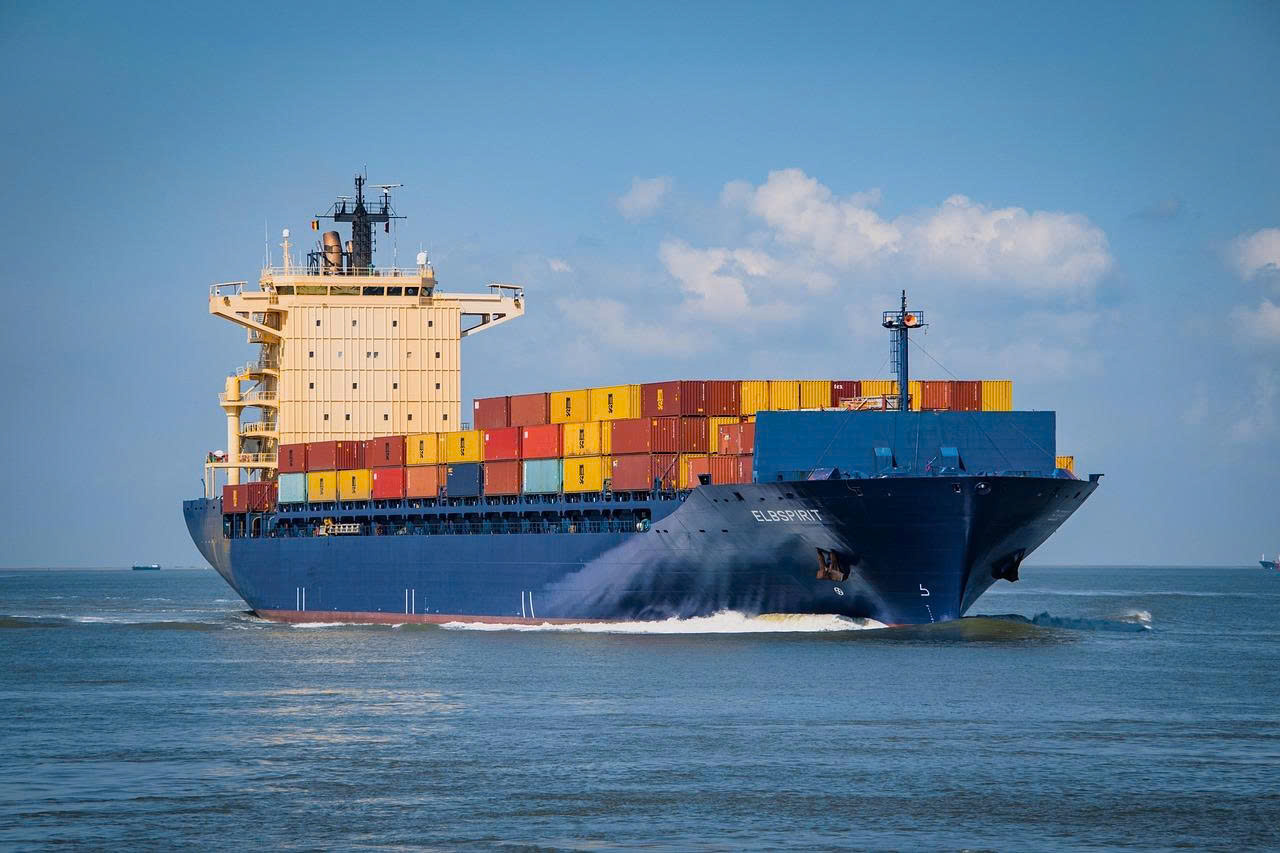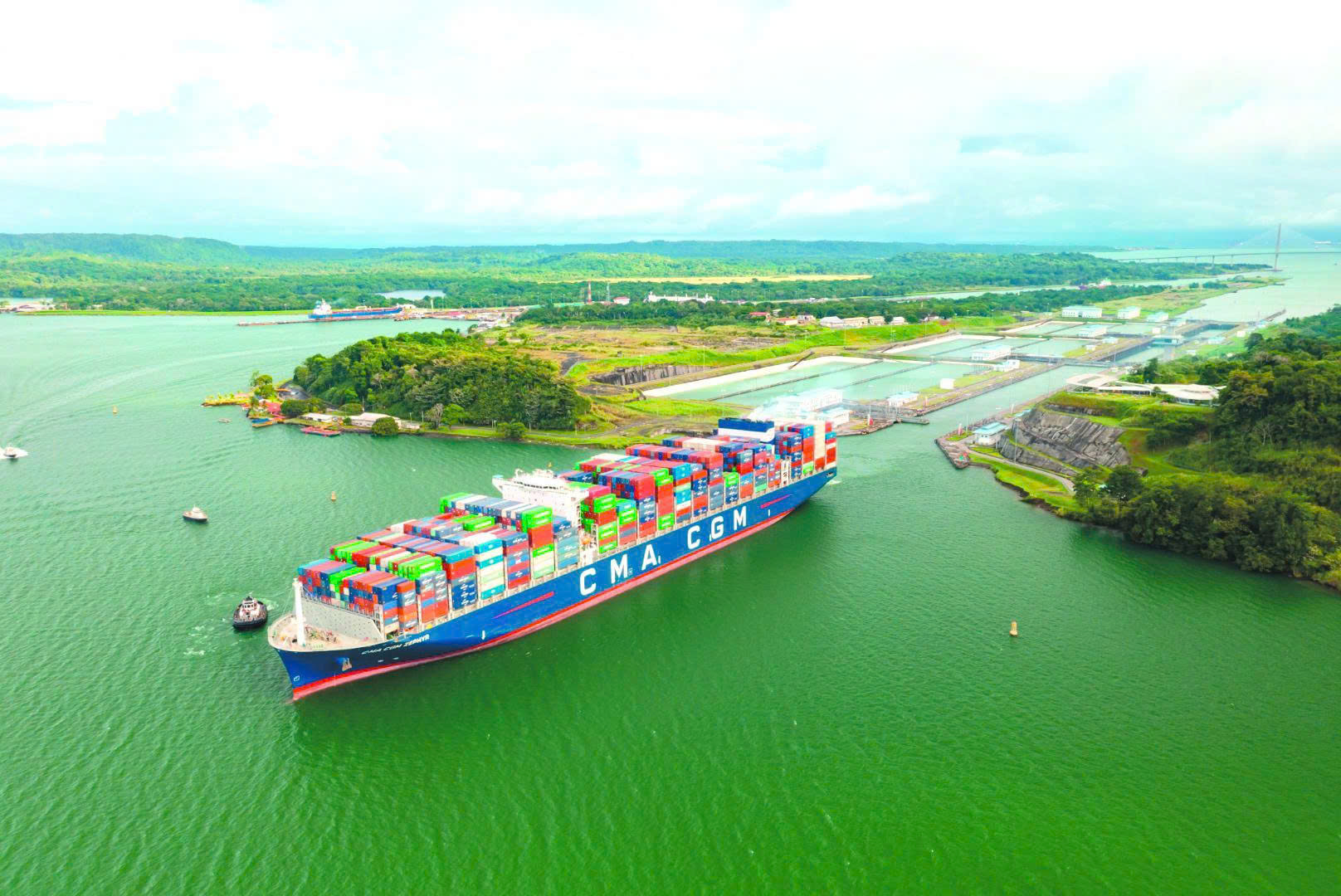
PANAMA CANAL TO FURTHER REDUCE DRAFT LIMIT FOR NEOPANAMAX VESSELS
The Panama Canal will further reduce the maximum allowable draft for Neopanamax vessels from late August 2026 as water levels in Gatun Lake continue to decline.
When Logistics Is No Longer Just an Operational Cost
For many years, logistics was viewed primarily as a back-end support function. Today, amid increasing global trade volatility, logistics has become a strategic factor directly influencing business growth, risk management capability, and long-term competitiveness.
For Vietnam - one of the world’s most trade-dependent economies - this challenge is becoming increasingly significant. According to the Vietnam Logistics Business Association (VLA), logistics costs currently account for approximately 16.8–17% of GDP, substantially higher than the global average of around 10.6–11.6%. This gap highlights not only a cost challenge, but also a major opportunity for operational optimization.
In an environment where geopolitical instability, freight volatility, and supply chain disruptions can occur at any time, businesses are no longer competing solely on product or pricing. Operational visibility, data control, and responsiveness are becoming critical competitive advantages.
Compared to large corporations, SMEs often operate with more limited financial resources, manpower, and management systems. As a result, their resilience against supply chain disruptions is significantly lower.
Many businesses still manage logistics through fragmented emails, spreadsheets, and manual coordination processes. As operational complexity increases, this model can lead to the limit in operational visibility, delayed responses to disruptions, rising unexpected logistics costs, reduced shipment control, and inefficient coordination across departments and logistics partners
Today, businesses are not only under pressure to reduce costs, but also to improve adaptability in an increasingly unpredictable global market.
One of the most common misconceptions among SMEs is that digital logistics transformation requires heavy investment in complex systems such as ERP or WMS platforms.
In reality, digital logistics is not defined by the amount of software a company owns, but by its ability to efficiently organize and control operations across the supply chain.
Businesses with strong digital logistics capabilities are often those that can apply digital measures such as synchronize operational data in real time, track shipment status across the transportation journey, standardize documentation workflows there by improving coordination speed among departments. From that it can help identify and mitigate risks before they escalate into major disruptions.
In other words, digital logistics is not only about operating faster - it is about making smarter operational decisions in highly dynamic environments.
1. Standardize Operational Processes and Data
Many logistics-related costs do not originate from transportation itself, but from inconsistent data management and fragmented operational processes. Standardization improves visibility, minimizes errors, and enhances overall operational efficiency.
2. Leverage Digital Infrastructure From Logistics Partners
SMEs do not necessarily need to build proprietary systems from scratch. By integrating with digitally capable logistics partners, businesses can quickly access transportation management tools, shipment tracking systems, and electronic documentation solutions.
3. Shift From Reactive Operations to Proactive Supply Chain Management
Strong supply chains are not defined by the absence of disruption, but by the ability to anticipate risks and respond faster than competitors. This capability is becoming a defining factor for sustainable growth.
For export-oriented businesses, particularly shipments with POL located in Vietnam, freight forwarders are no longer simply transportation coordinators. Modern logistics partners are increasingly playing a strategic role in helping businesses improve operational capability and supply chain visibility.
Through solutions such as: electronic documentation (e-AWB, e-DO), tracking shipment visibility systems, clear quotation frame, real-time operational data synchronization, logistics optimization and cost-control support
In today’s volatile global business environment, competitive advantage no longer comes solely from company size or low operating costs. Agility, responsiveness, and supply chain visibility are becoming the key drivers of sustainable growth.
For SMEs, digital logistics transformation is no longer a trend-driven initiative. It is rapidly becoming a strategic foundation for improving operational efficiency, strengthening adaptability, and building long-term competitive advantage in global supply chains.
Sources: Compiled
The Panama Canal will further reduce the maximum allowable draft for Neopanamax vessels from late August 2026 as water levels in Gatun Lake continue to decline.
In modern logistics, delays are no longer viewed as mere inconveniences. They can result in significant financial losses, including reduced revenue, dissatisfied customers, increased warehousing costs, disrupted production schedules, and damaged business reputation
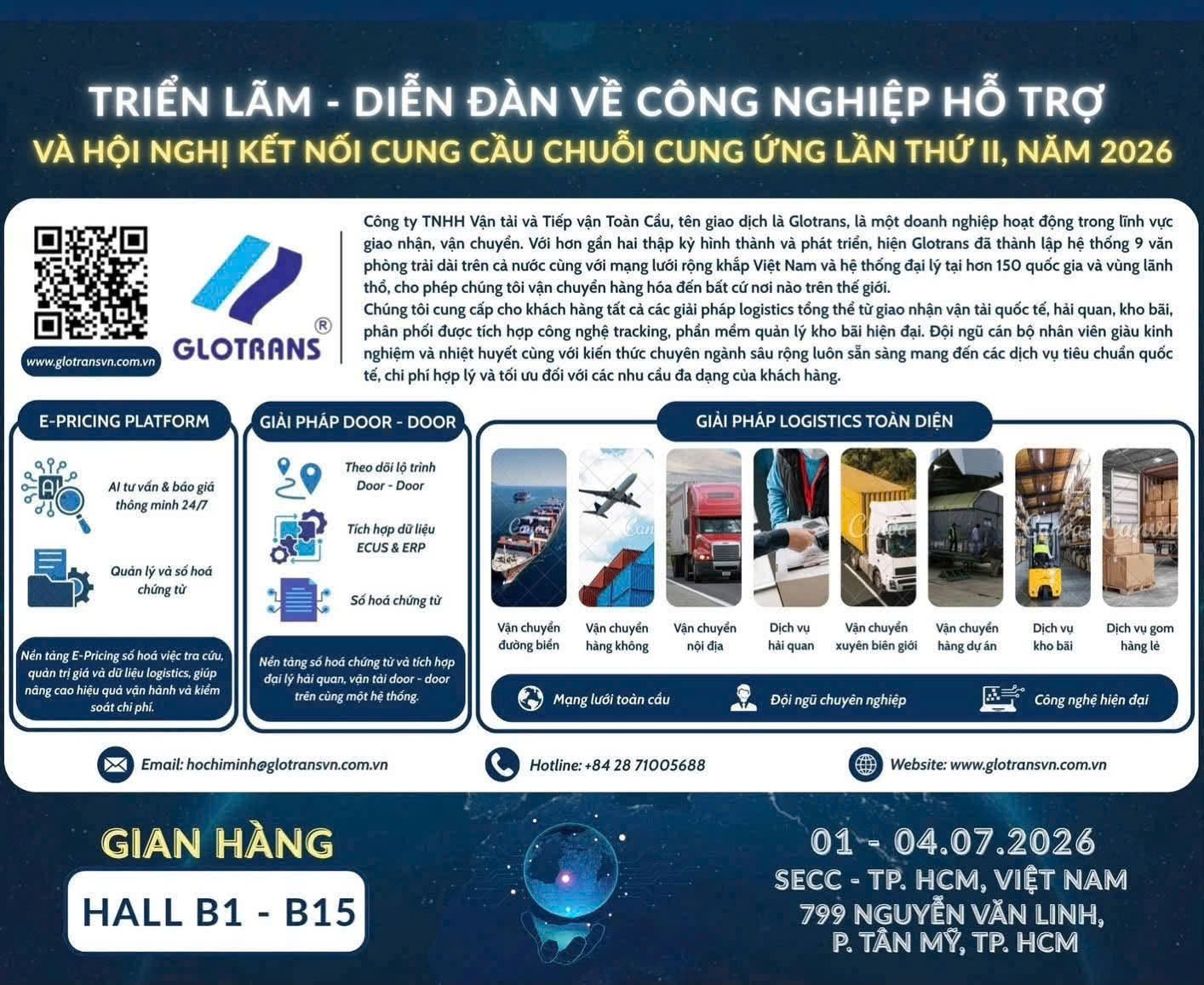
From July 1–4, 2026, Glotrans is participating in MTA Vietnam 2026, one of Vietnam's leading international exhibitions for precision engineering, manufacturing, and supporting industries, held at the Saigon Exhibition and Convention Center (SECC), Ho Chi Minh City.
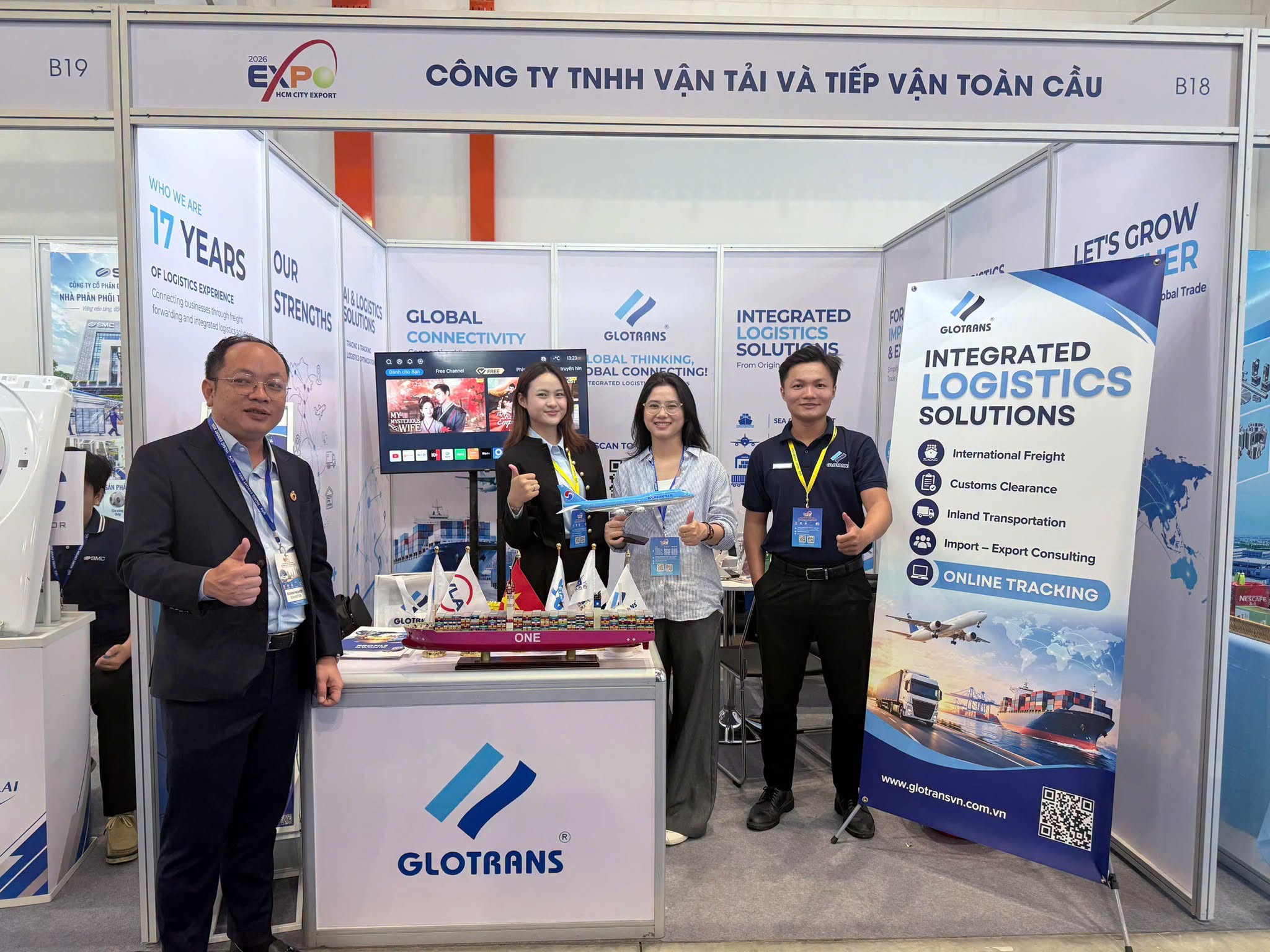
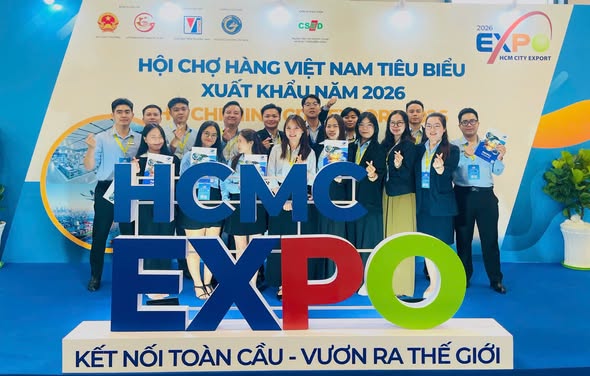
Building on the positive momentum of the opening day, on October 23, 2026, Glotrans’ Booth B18 at HCMC Export 2026 continued to welcome a large number of visitors, businesses, and domestic and international partners for networking, service exploration, and discussions on potential collaboration opportunities.
In celebration of Vietnamese Women’s Day on October 20, Glotrans branches across the entire system have organized meaningful activities, creating a warm, joyful atmosphere and many memorable moments for female employees.
The shipment of food additives was transported in container No. FCIU3301688 (20’), under B/L MPRSMUM1806, on the voyage from Nhavasheva Port (India) to Dinh Vu Port (Hai Phong, Vietnam) on 29/04/2017.
Company T (Plaintiff – the Insured) entered into an insurance contract with Company B (Defendant – the Insurer). After the insured event occurred, the Insurer alleged that the Insured had violated its obligation to prevent and mitigate losses. The Arbitral Tribunal acknowledged that such an obligation exists but concluded that the Insured did not breach it.
Under the insurance contract, the premium was to be paid in three installments, and in all three, the insured party was late in payment. When a dispute arose, the insurer (Defendant) argued that the insurance contract had terminated before the insured event occurred due to the late premium payment and therefore refused to make an insurance payout. However, the Arbitral Tribunal held a contrary view.