PANAMA CANAL TO FURTHER REDUCE DRAFT LIMIT FOR NEOPANAMAX VESSELS
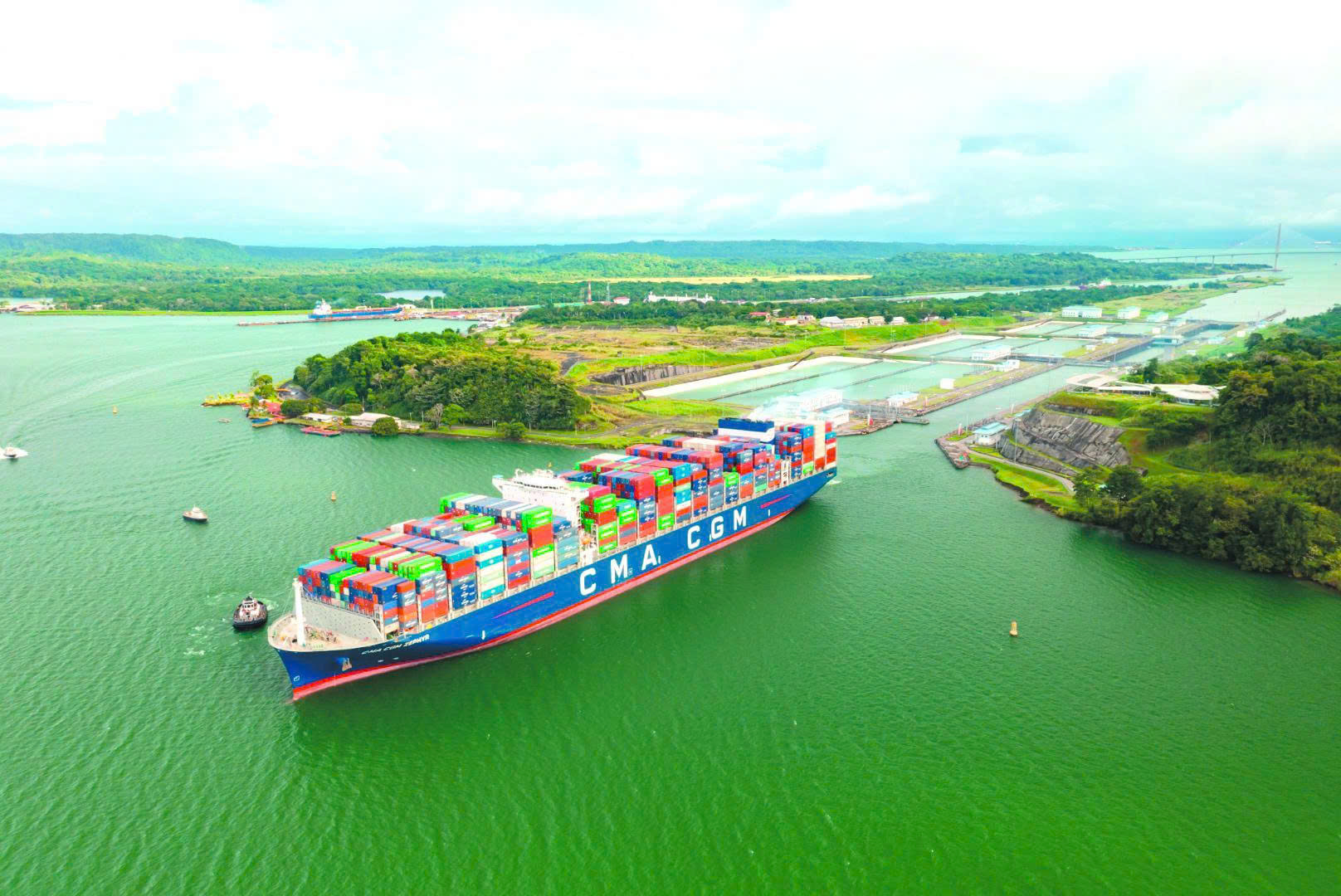
The Panama Canal will further reduce the maximum allowable draft for Neopanamax vessels from late August 2026 as water levels in Gatun Lake continue to decline.
After two hot years driven by e-commerce and disruption in sea freight, the air-cargo market in 2025 is slowing as supply and demand gradually normalize, belly-capacity (passenger-aircraft freight space) recovers and trade policies fluctuate. For Vietnamese companies exporting high-value goods, this is the time to re-calculate the “sea-air mix” to optimize cost, time and shipment certainty.
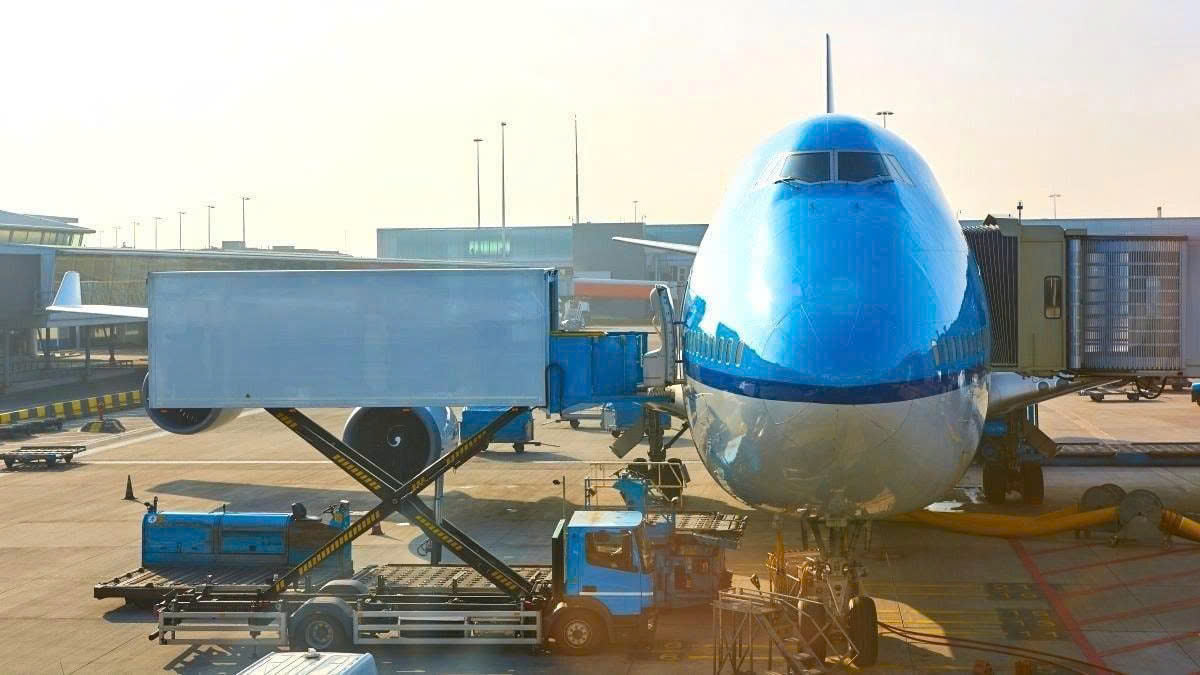
Airlines and analysts have lowered growth expectations after the 2023-24 “bull run”, as demand is held back by inflation, tariff changes and cautious consumer sentiment. According to the International Air Transport Association (IATA), the growth momentum for air-cargo volumes decelerated in Q1 2025; on the supply side, belly-capacity continues to widen as passenger networks recover, thereby pushing back the “tight-space” environment seen in previous years.
From a market viewpoint, Xeneta forecasts global air-cargo volume growth in 2025 at around 4-6 %, roughly matching or only marginally above capacity growth (estimated 3-5 %). This scenario means the market will be less tight, increasing the negotiating power of shippers—especially on routes where passenger travel has already recovered.
A notable variable is the “de minimis” and tax policy for low-value parcels imported into the US—previously a major driver of the e-commerce-fueled air-cargo surge. With some preferential treatment being tightened, e-commerce flows China→US have dropped sharply, forcing airlines and retailers to re-route, or even redirect part of the volume to sea freight; this in turn eases pressure on trans-Pacific air-cargo capacity.
When considering a sea-air mix, shippers should examine three axes: price, time and risk.
(1) Price threshold: if sea-freight rates spike due to a geopolitical event, the air component of the mix may be expanded temporarily.
(2) Time threshold: for seasonal fashion, new-launch electronics, pharmaceuticals with cold-chain needs, sea-air can “cut half the leg” of sea journey while still being cheaper than full air.
(3) Risk threshold: when ocean-freight schedules are uncertain, using air for last-leg protection can preserve delivery commitments.
With supply growing faster than demand, average air-freight rates and yields (revenue per tonne-kilometre) are under pressure—especially on Asia–US routes which are highly sensitive to retail cycles. Nonetheless, the market still sees “local jumps”: e.g., tension in the Red Sea / Suez Canal can cause some freight to revert to air on certain routes when ocean chains detour or vessel schedules are disrupted. This creates short-term “hot spots” in pricing on a weekly/regional basis, forcing shippers to monitor booking windows closely.
Choose a reliable transit hub: hubs such as Doha (DOH), Incheon (ICN) and Hong Kong (HKG) currently have high flight frequencies and strong connectivity with ASEAN and North America/Europe. Routing via a stable hub helps control bottlenecks, especially when the sea route faces geopolitical risk or channel restrictions. For high-tech / fast-fashion goods, you can ship by sea to an Asian hub — then by air to America/Europe in periods of market “spike”.
After the “bull run”, air cargo in 2025 is cooling but not “freezing”: demand remains modestly positive, while capacity is sometimes expanding, sometimes tightening depending on aircraft-delivery schedules and policy. Vietnamese exporters should build their own sea-air “playbook” for each product group, updated quarterly based on yield, seasonal demand windows and sea-route risk — so they decide based on data: price threshold, time threshold, risk threshold. When air is used as a strategic lever (at the right time, for the right SKU, via the right hub), the supply-chain becomes both flexible to disruption and protective of margin in the new “normal” era of global logistics.
Source: collect
The Panama Canal will further reduce the maximum allowable draft for Neopanamax vessels from late August 2026 as water levels in Gatun Lake continue to decline.
In modern logistics, delays are no longer viewed as mere inconveniences. They can result in significant financial losses, including reduced revenue, dissatisfied customers, increased warehousing costs, disrupted production schedules, and damaged business reputation
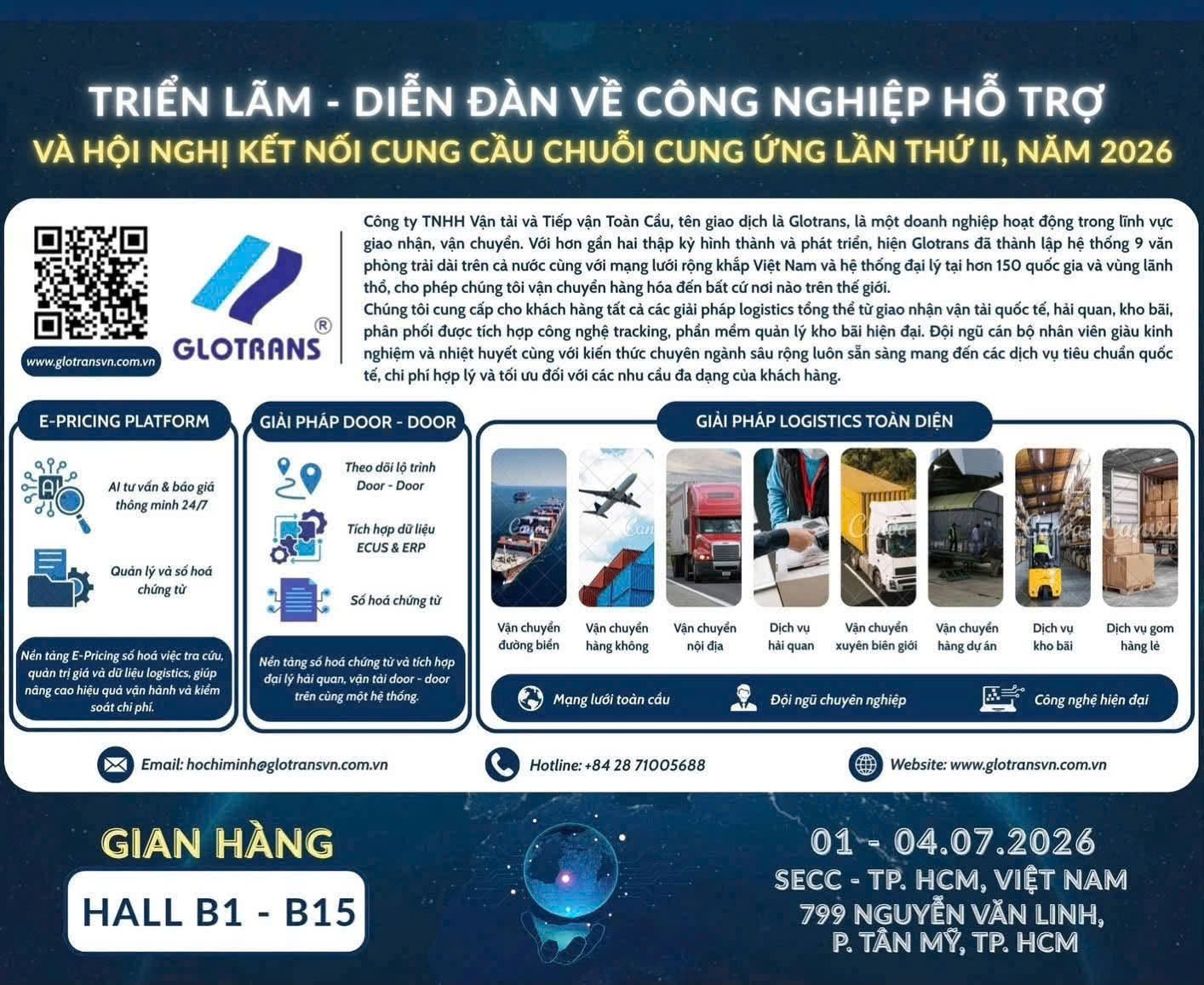
From July 1–4, 2026, Glotrans is participating in MTA Vietnam 2026, one of Vietnam's leading international exhibitions for precision engineering, manufacturing, and supporting industries, held at the Saigon Exhibition and Convention Center (SECC), Ho Chi Minh City.
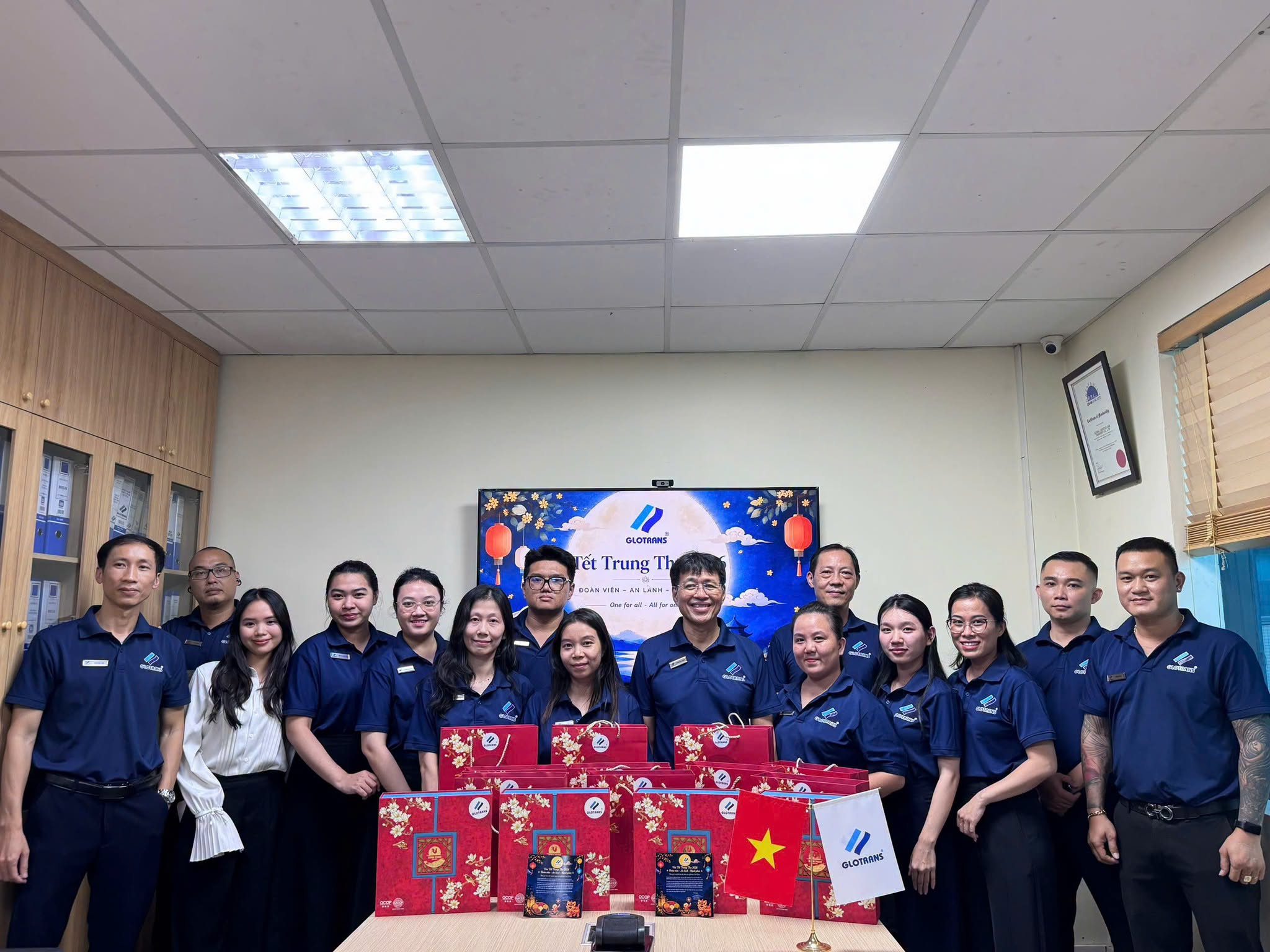
The Mid-Autumn Festival is not only a time for family reunions, but also a special occasion to share love, send warm wishes, and enjoy meaningful moments with our beloved colleagues.
Over the past few days, GLOTRANS’s General Director has been traveling between offices, from Da Nang to Quy Nhon, to personally attend meetings reviewing the business performance of the first six months of the year, assess each office’s operations, and work with the teams to set goals for the next stage.
GLOTRANS would like to inform our Valued Customers and Partners of our holiday schedule for Vietnam’s National Day (2 September 2026) as follows:
The shipment of food additives was transported in container No. FCIU3301688 (20’), under B/L MPRSMUM1806, on the voyage from Nhavasheva Port (India) to Dinh Vu Port (Hai Phong, Vietnam) on 29/04/2017.
Company T (Plaintiff – the Insured) entered into an insurance contract with Company B (Defendant – the Insurer). After the insured event occurred, the Insurer alleged that the Insured had violated its obligation to prevent and mitigate losses. The Arbitral Tribunal acknowledged that such an obligation exists but concluded that the Insured did not breach it.
Under the insurance contract, the premium was to be paid in three installments, and in all three, the insured party was late in payment. When a dispute arose, the insurer (Defendant) argued that the insurance contract had terminated before the insured event occurred due to the late premium payment and therefore refused to make an insurance payout. However, the Arbitral Tribunal held a contrary view.