PANAMA CANAL TO FURTHER REDUCE DRAFT LIMIT FOR NEOPANAMAX VESSELS
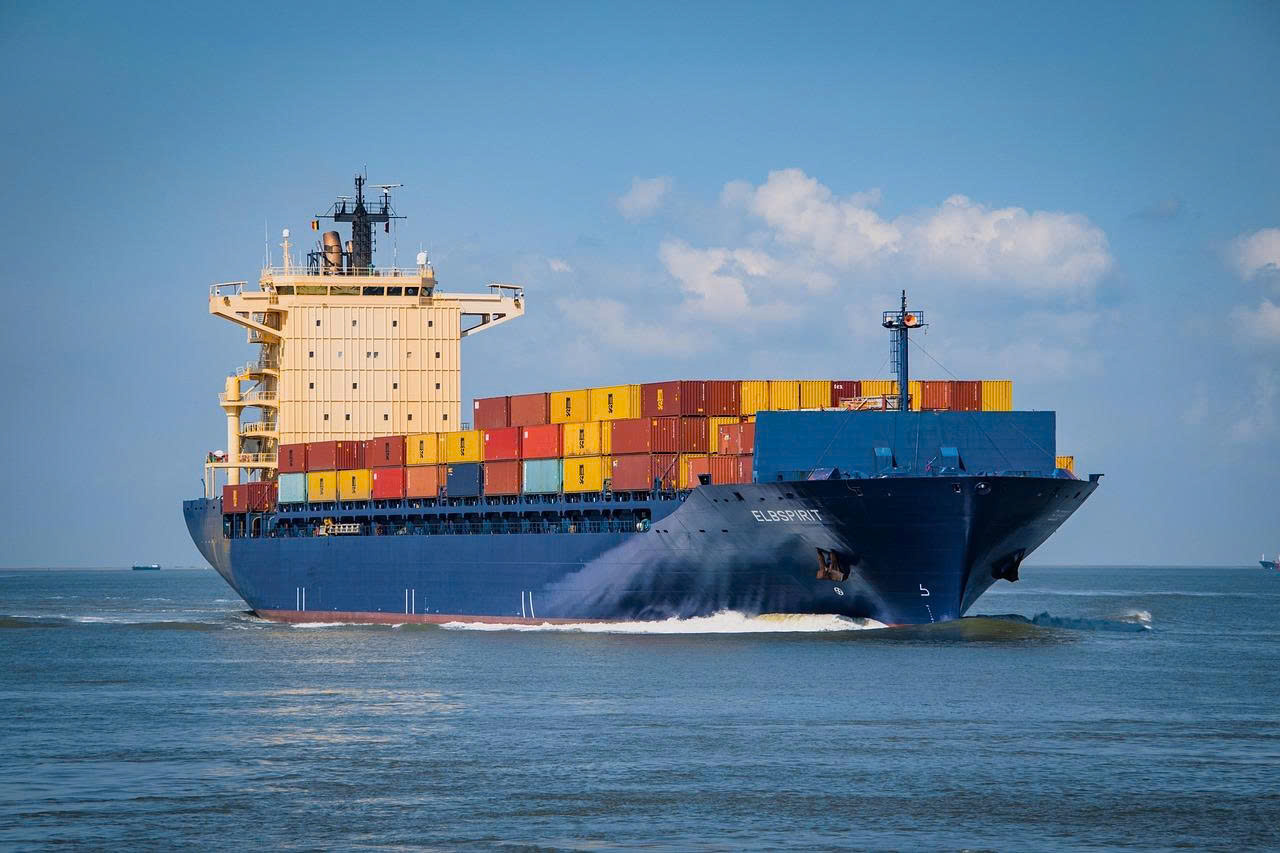
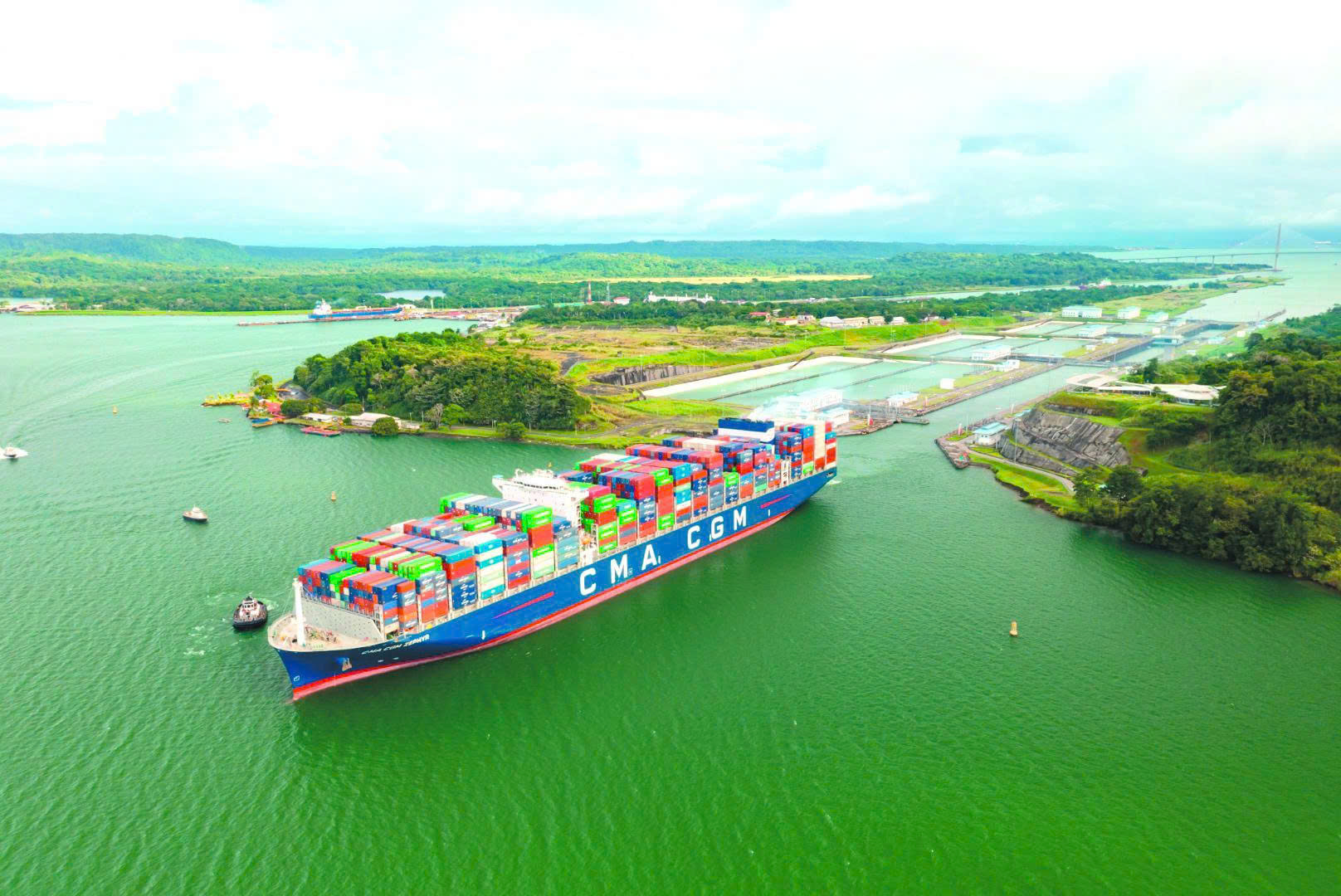
The Panama Canal will further reduce the maximum allowable draft for Neopanamax vessels from late August 2026 as water levels in Gatun Lake continue to decline.
Ba Ria - Vung Tau with the advantage of natural resources, the seaport has been promoting its role and position as an international gateway along with the shift of industrialization - modernization in the new context to realize the goals and objectives. aspiration for a "prosperous - happy country".
As a national general port, an international gateway, Ba Ria - Vung Tau seaport (BRVT) together with Hai Phong port form two important poles in the development of Vietnam's seaports, contributing to the formation of a corridor connecting important economic centers of the country, especially Hanoi and Ho Chi Minh City, and expanding international connections.
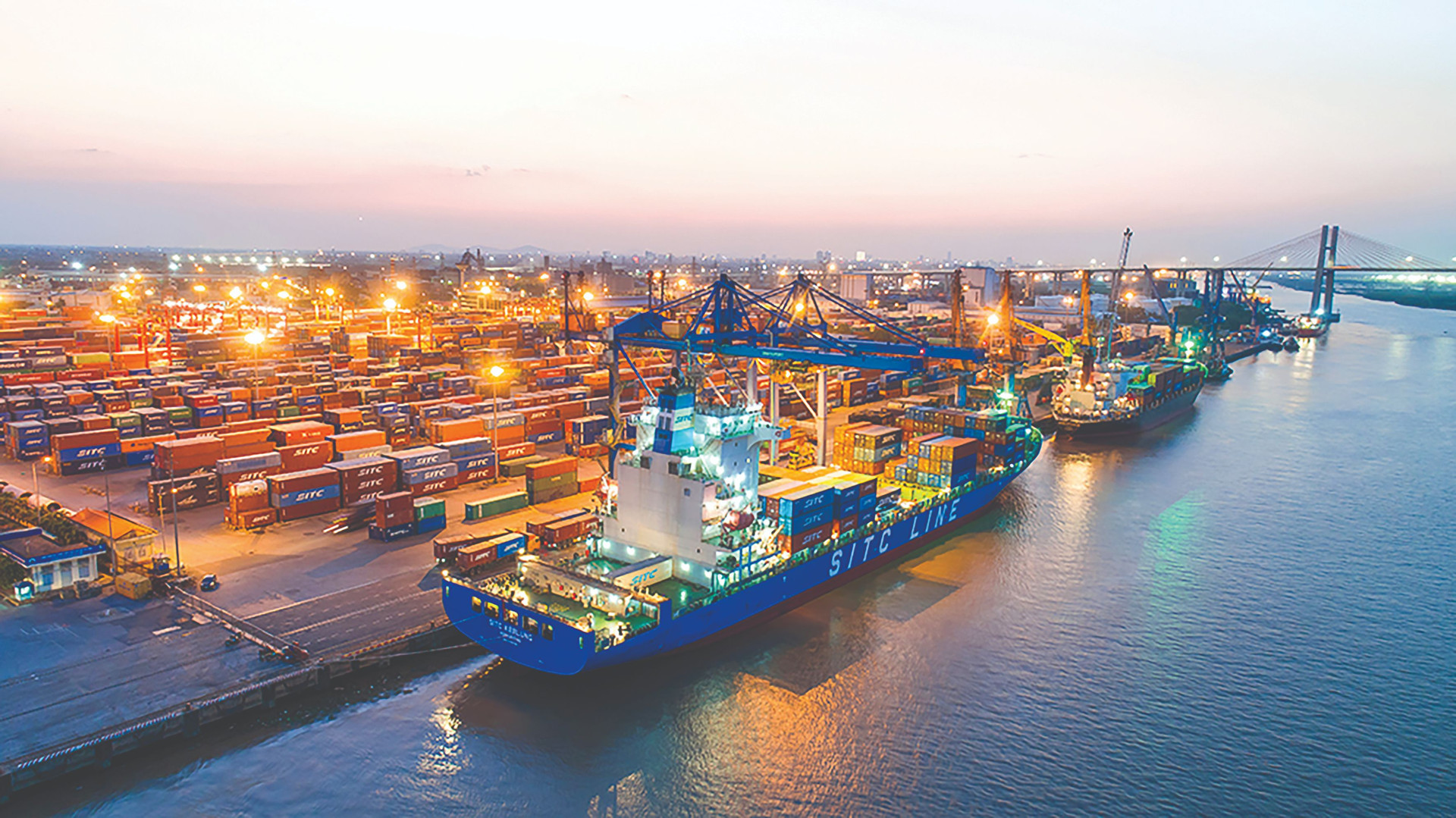
With the BRVT seaport, Cai Mep - Thi Vai port cluster accounts for the largest proportion in terms of the number of seaports, the number of ships and the throughput of goods. Cai Mep - Thi Vai Port has been invested by the Provincial People's Committee, built by available advantages such as near international shipping routes and large import and export centers; conditions of deep draft, capable of receiving ships of large tonnage, unaffected by waves and waves, together with a mild climate, can be exploited all year round. Currently, the port has built a convenient inter-regional transport infrastructure system; has a modern and professional logistics center, has an appropriate banking, financial and insurance system; convenient import and export customs procedures, and have a strong enough fleet to release goods quickly...
Cai Mep - Thi Vai is also the only port cluster in Vietnam that has direct mother ships to Europe and America and the highest frequency of going to the US in Southeast Asia, ranked in the group of seaports with the highest container handling volume world. The port cluster also attracts and connects with major shipping groups and port operators in the world such as APMT (Denmark), SSA Marine (USA) and attracts the world's leading shipping lines to bring them. Ships call at ports such as: Maersk Lines, CMA-CGM, Hapag Lloyd, Cosco, YangMing...
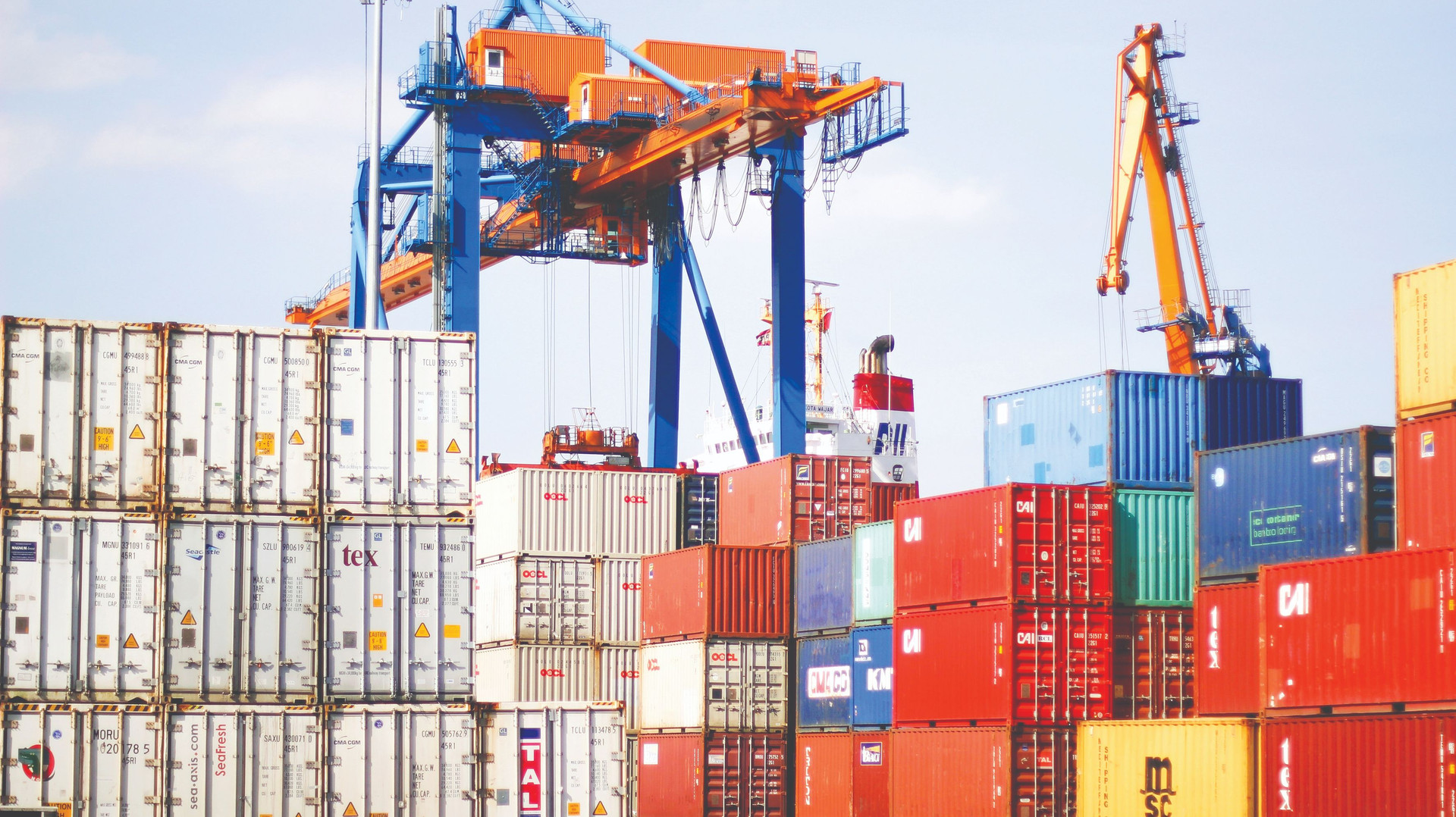
Currently, the volume of goods through the seaport in BRVT by sea accounts for about 67% for general cargo and about 80-84% for container cargo. In which, Cai Mep - Thi Vai port cluster assumes the role of international transshipment with 43% - 45% of the country's cargo volume.
Currently, to expand connectivity, the province is focusing on upgrading inland waterways connecting Cai Mep with the Mekong Delta; planning the system of wharves and storage yards, performing logistics services on the inland waterway corridors connecting the Mekong Delta - Cai Mep and the whole Tay Ninh and Binh Duong areas.
In order for Cai Mep - Thi Vai port to develop properly with its role, potential and advantages, the province has focused on promoting the progress of the Cai Mep Ha Logistics Center project, the Provincial Party Committee also identified this as one of 42 key projects to be implemented in the 2020-2025 term.
Cai Mep Ha Logistics Center (project No. 12) currently, the Provincial People's Committee is assigning the Department of Transport and the Department of Construction to adjust the overall planning of the construction subdivision at the rate of 1/2000 of the Logistics Center project. Cai Mep Ha (according to the policy of meeting the Party Committee of the Provincial People's Committee in Notice No. 495/TB-BCSD dated March 25, 2022).
Ba Ria - Vung Tau province has also invested in building and putting into operation routes connecting to the port system such as Thi Vai - Cai Mep inter-port road, phase 1 connecting the entire seaport system from Cai Mep Ha to the My Xuan area; to start construction of internal connection routes such as road 991B, Phuoc Hoa - Cai Mep road, road behind My Xuan port, Long Son - Cai Mep road; is investing in the construction project of route 991B connecting Cai Mep port system through Cai Mep Ha Logistics Center, Phu My III Industrial Park with National Highway 51 and connecting to Ring Road 4 of Ho Chi Minh City in the future; and Phuoc An bridge project to connect Cai Mep - Thi Vai port system with Ben Luc - Long Thanh highway.
The Panama Canal will further reduce the maximum allowable draft for Neopanamax vessels from late August 2026 as water levels in Gatun Lake continue to decline.
In modern logistics, delays are no longer viewed as mere inconveniences. They can result in significant financial losses, including reduced revenue, dissatisfied customers, increased warehousing costs, disrupted production schedules, and damaged business reputation
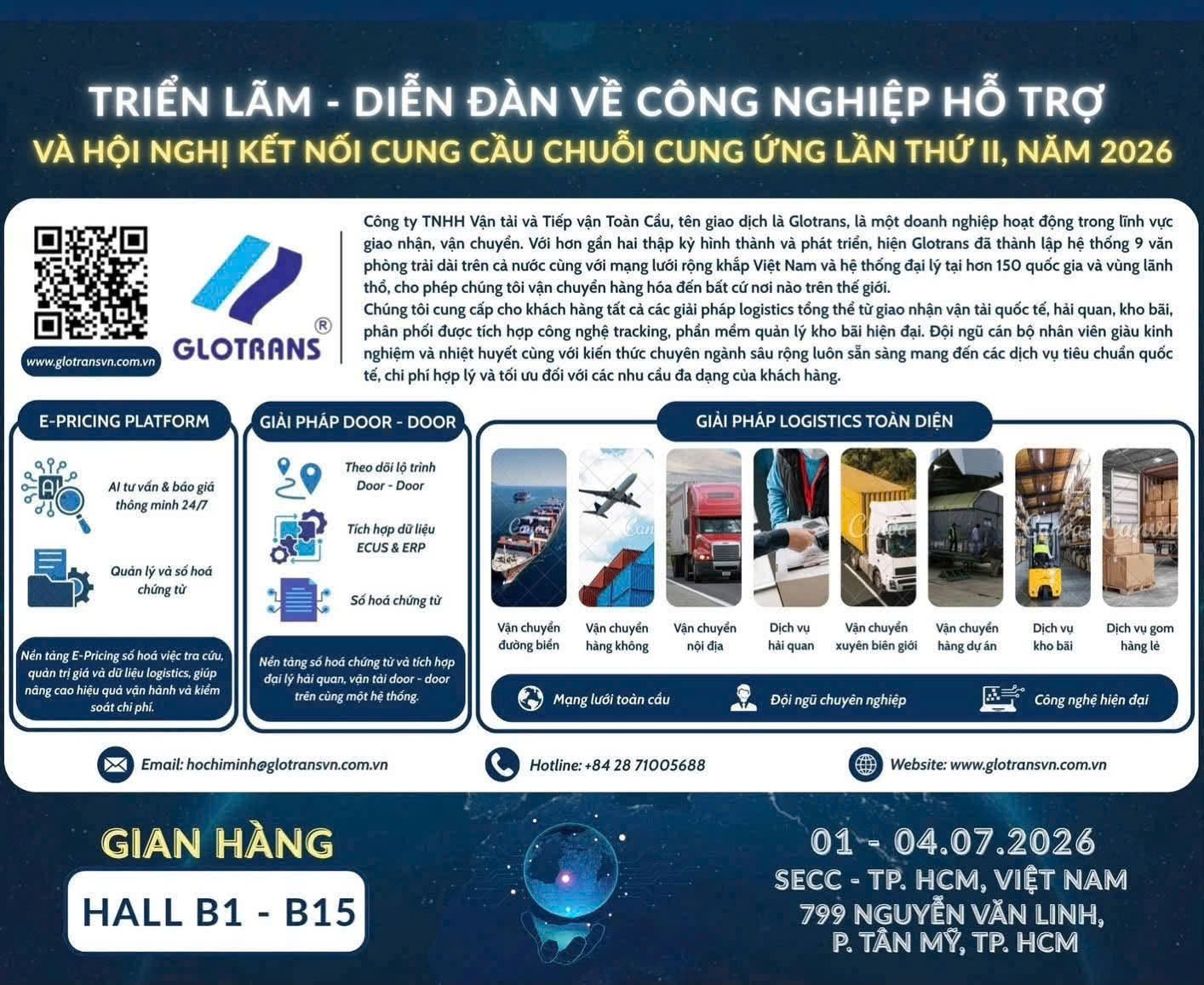
From July 1–4, 2026, Glotrans is participating in MTA Vietnam 2026, one of Vietnam's leading international exhibitions for precision engineering, manufacturing, and supporting industries, held at the Saigon Exhibition and Convention Center (SECC), Ho Chi Minh City.
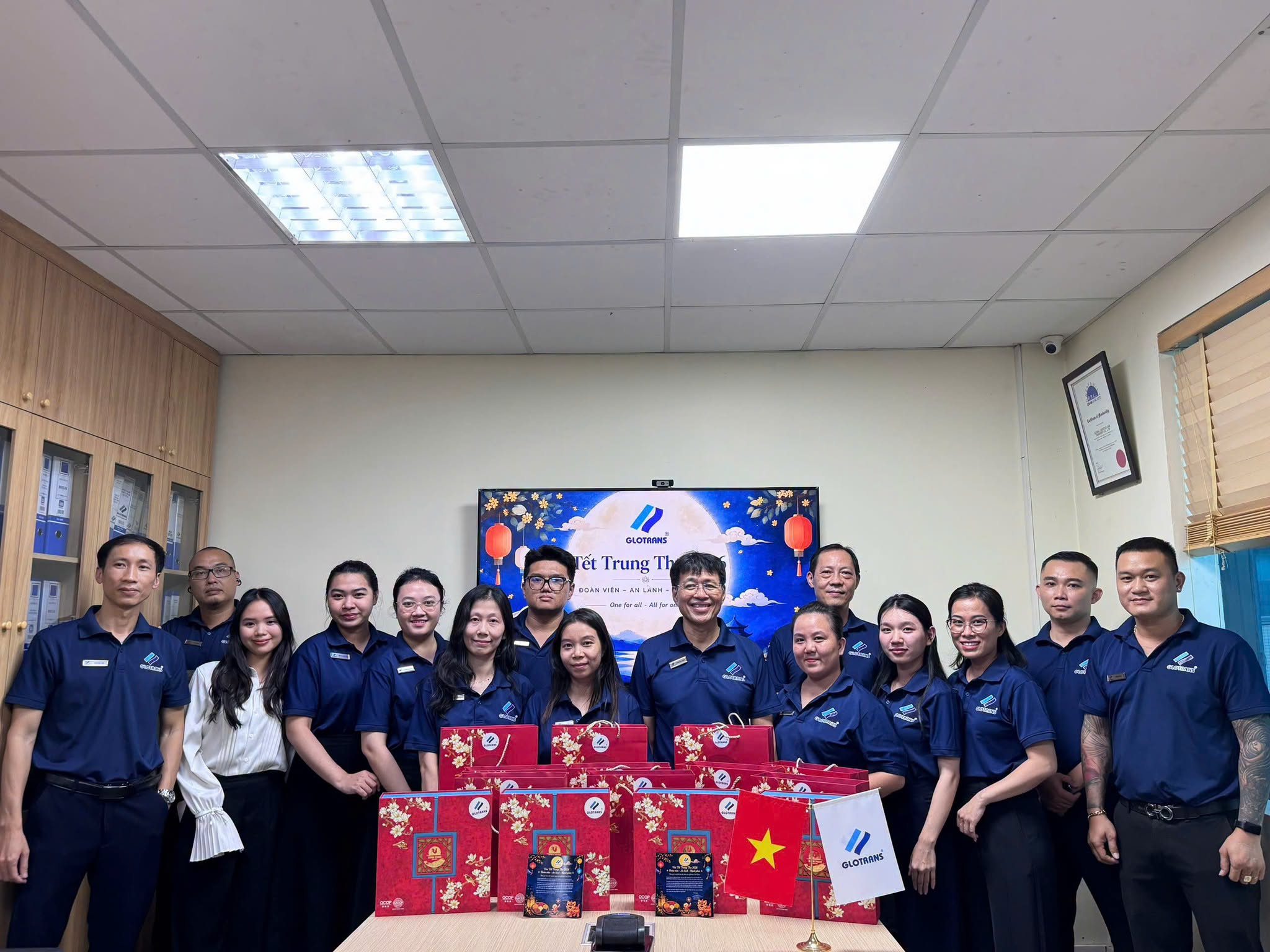
The Mid-Autumn Festival is not only a time for family reunions, but also a special occasion to share love, send warm wishes, and enjoy meaningful moments with our beloved colleagues.
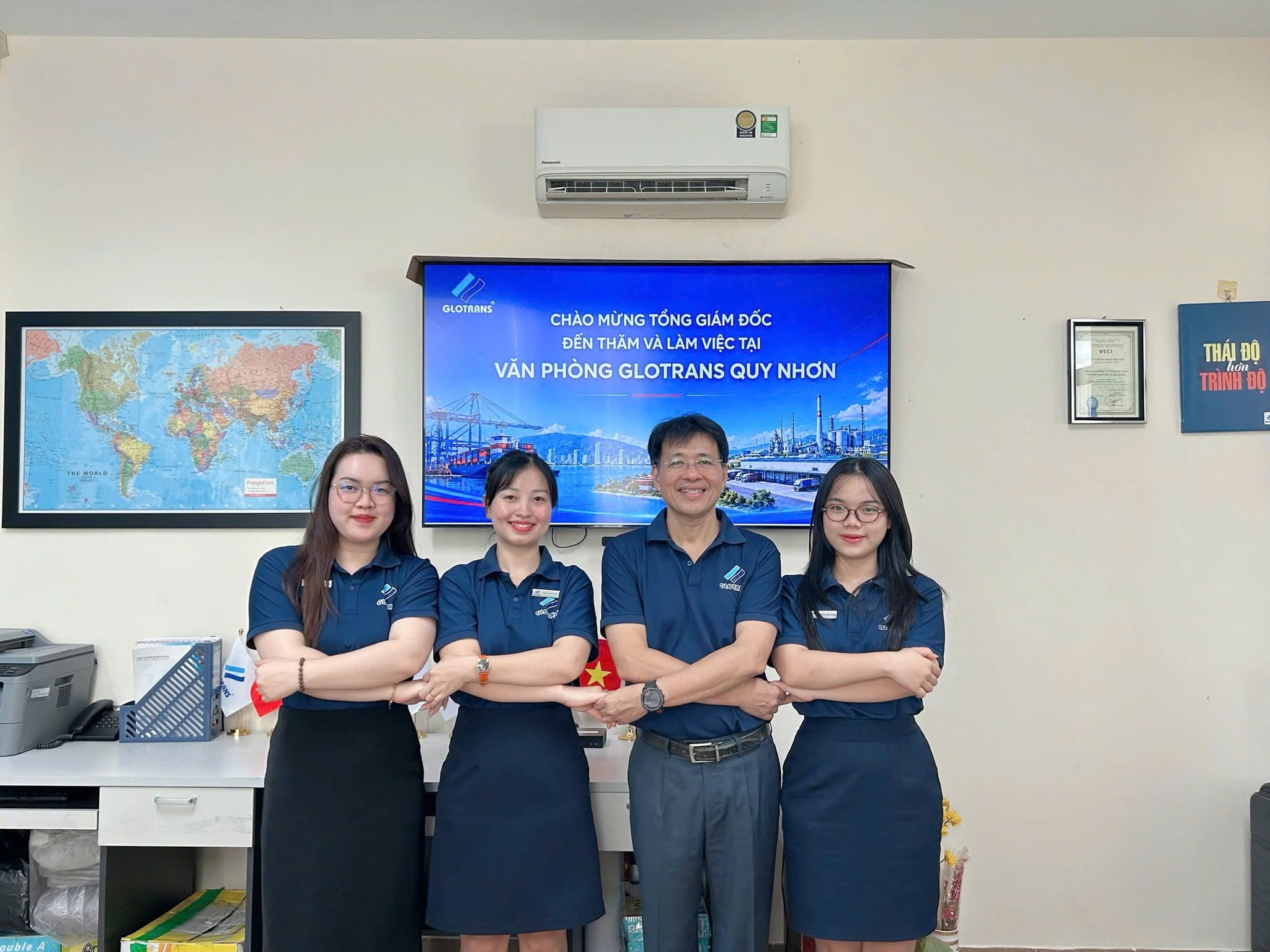
Over the past few days, GLOTRANS’s General Director has been traveling between offices, from Da Nang to Quy Nhon, to personally attend meetings reviewing the business performance of the first six months of the year, assess each office’s operations, and work with the teams to set goals for the next stage.
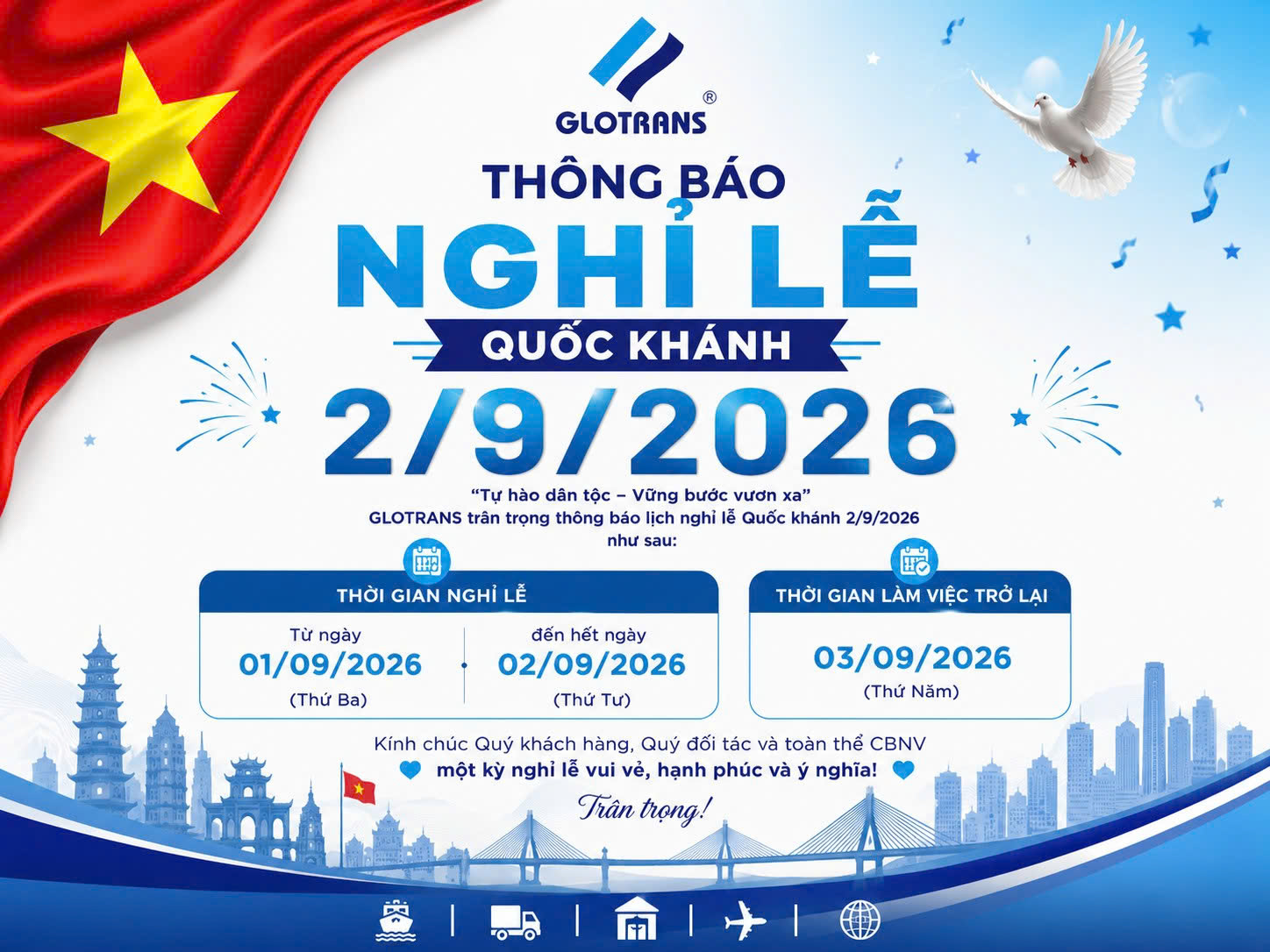
GLOTRANS would like to inform our Valued Customers and Partners of our holiday schedule for Vietnam’s National Day (2 September 2026) as follows:
The shipment of food additives was transported in container No. FCIU3301688 (20’), under B/L MPRSMUM1806, on the voyage from Nhavasheva Port (India) to Dinh Vu Port (Hai Phong, Vietnam) on 29/04/2017.
Company T (Plaintiff – the Insured) entered into an insurance contract with Company B (Defendant – the Insurer). After the insured event occurred, the Insurer alleged that the Insured had violated its obligation to prevent and mitigate losses. The Arbitral Tribunal acknowledged that such an obligation exists but concluded that the Insured did not breach it.
Under the insurance contract, the premium was to be paid in three installments, and in all three, the insured party was late in payment. When a dispute arose, the insurer (Defendant) argued that the insurance contract had terminated before the insured event occurred due to the late premium payment and therefore refused to make an insurance payout. However, the Arbitral Tribunal held a contrary view.